Picture yourself walking into two homes built around the same time. Both have beautiful hardwood floors, freshly painted walls, and stylish furniture. Yet one feels noticeably more refined and inviting. The difference is subtle but powerful. The carefully chosen finishing details around the ceilings, doors, windows, and floors quietly elevate the entire space.
Those finishing details often lead to one common question. Are moulding and trim the same thing? Many homeowners use the terms interchangeably, but they are not identical. Knowing the distinction can help you make smarter design decisions, communicate more clearly with contractors, and choose finishes that suit your home’s style.
Whether you are renovating a single room or planning a complete remodel, understanding moulding and trim will help you create a polished interior that feels complete.
Key Takeaways
- Trim is the general term for finishing materials used throughout a home’s interior.
- Moulding is a decorative type of trim with shaped or detailed profiles.
- Different rooms and architectural styles benefit from different trim designs.
- Choosing quality materials and professional installation creates a cleaner, longer-lasting finish.
What Is the Difference Between Moulding and Trim?
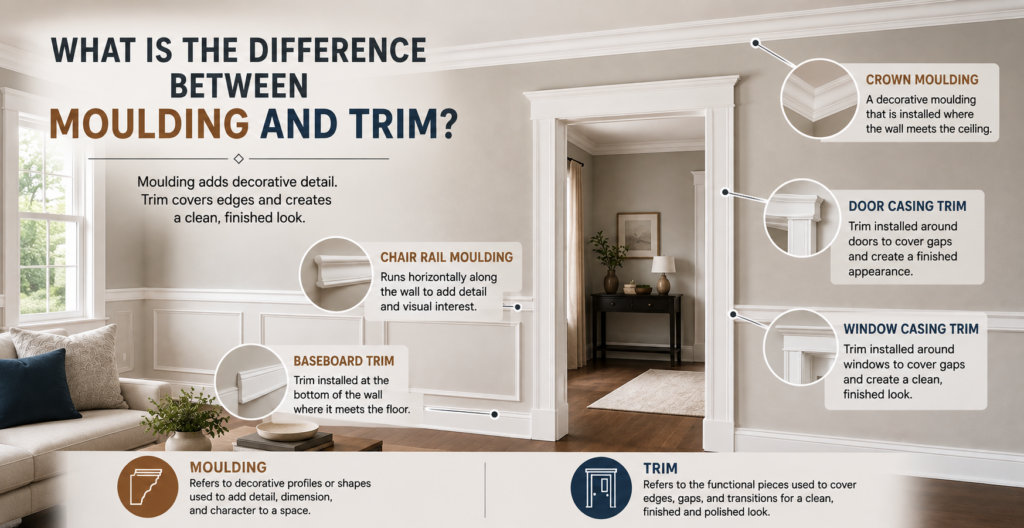
Trim refers to all finishing pieces installed where surfaces meet, such as around doors, windows, ceilings, and floors. It hides gaps, protects edges, and gives a room a finished appearance.
Moulding is a decorative category within trim. It features shaped profiles that add architectural detail, texture, and visual interest to a space.
Think of it this way. Every moulding is trim, but not every trim piece is moulding. Understanding this simple relationship makes it much easier to select the right finishing materials during a renovation.
Why Homeowners Often Confuse the Two
The confusion is understandable because builders, designers, and even retailers sometimes use both terms interchangeably. In everyday conversation, someone might refer to crown moulding simply as trim, while another person may call all trim moulding.
The easiest way to remember the difference is to focus on function.
- Trim finishes and protects transitions.
- Moulding primarily enhances appearance while also serving as trim.
Once you understand this distinction, discussing renovation projects becomes much simpler.
Common Types of Interior Trim
Every home contains several forms of trim, each serving a unique purpose. Understanding the types of interior trim helps you appreciate how each contributes to a finished design.
Baseboards
Installed where walls meet the floor, baseboards protect walls from everyday wear while creating a clean transition between flooring and drywall.
Door and Window Casing
Door and window casing surrounds openings to hide construction gaps and frame architectural features. Depending on the design, casing can be simple or highly decorative.
Crown Moulding
Installed where walls meet the ceiling, crown moulding softens sharp angles while adding elegance and visual height.
Chair Rail
Originally designed to protect walls from furniture, chair rails now serve mainly as decorative accents that divide wall treatments.
Picture Rail
Often found in historic homes, picture rails allow artwork to hang without damaging finished walls.
These components work together to create a balanced, cohesive interior.
Types of Moulding for Homes
Not every molding serves the same purpose. Understanding the various types of moulding for homes helps homeowners choose details that match both architecture and personal style.
Some of the most common options include:
- Crown moulding
- Cove moulding
- Shoe moulding
- Quarter-round moulding
- Panel moulding
- Dentil moulding
- Bead moulding
Each profile creates a different visual effect. A modern home often benefits from clean, simple lines, while traditional homes typically feature more decorative profiles.
Moulding vs Trim Differences at a Glance
| Feature | Trim | Moulding |
| Primary purpose | Finishes edges and transitions | Adds decorative architectural detail |
| Appearance | Can be simple or decorative | Usually shaped or detailed |
| Common locations | Floors, doors, windows, ceilings | Ceilings, walls, cabinets, doors |
| Function | Protection and finishing | Decoration plus finishing |
| Best for | Every home | Homes needing added character |
This comparison highlights the key moulding vs trim differences without making the topic more complicated than it needs to be.
A Simple Framework for Choosing the Right Option
Selecting the right finishing details becomes much easier when you follow a straightforward process.
1. Consider Your Home’s Style
Traditional homes often look best with decorative profiles, while modern interiors typically favor simpler designs.
2. Evaluate the Room
Formal spaces like dining rooms and entryways usually benefit from decorative mouldings. Utility rooms and laundry rooms often require only functional trim.
3. Match Existing Features
Consistency matters. Matching existing profiles creates a seamless appearance throughout the home.
4. Think About Maintenance
Some detailed profiles collect more dust and require additional cleaning. Simpler profiles are often easier to maintain.
Choosing the Right Home Finishing Materials
Selecting quality home finishing materials is just as important as choosing the right design.
Popular materials include:
- Solid hardwood
- MDF
- PVC
- Finger-jointed pine
- Polyurethane
Each option offers different advantages depending on moisture exposure, durability requirements, and budget.
For example, bathrooms often benefit from moisture-resistant materials, while living rooms frequently showcase natural wood for its warmth and timeless appeal.
Understanding Baseboard vs Crown Moulding
Many homeowners also compare baseboard vs crown moulding, but these two serve completely different purposes.
Baseboards sit along the bottom of the wall, protecting it from scuffs while creating a finished transition to the floor.
Crown moulding sits where the wall meets the ceiling, drawing the eye upward and creating a more elegant visual connection.
Although both are trim products, they work in different areas of the room and create entirely different design effects.
Interior Wood Trim or Alternative Materials?
When selecting interior wood trim, homeowners often wonder whether natural wood is always the best choice.
Solid wood remains popular because it can be stained, refinished, and repaired over time. However, engineered materials like MDF provide excellent value in dry interior spaces and offer smooth paint finishes.
Rooms exposed to moisture may benefit from synthetic alternatives that resist swelling and warping better than wood.
The right material depends on your home’s needs rather than a single universal solution.
Common Mistakes Homeowners Make
Even carefully planned renovations can include avoidable mistakes.
Some of the most common include:
- Mixing too many trim styles in one home
- Choosing profiles that overwhelm small rooms
- Ignoring ceiling height when selecting crown moulding
- Using low-quality materials in high-traffic areas
- Skipping proper measurements before installation
Avoiding these mistakes helps create a cleaner, more professional-looking finish that stands the test of time.
A Real-Life Example
Imagine a homeowner renovating a 1980s family home. Initially, they planned to replace only the flooring. Once the new floors were installed, the outdated trim became much more noticeable.
Instead of replacing everything with elaborate decorative profiles, they selected simple casing around doors and windows, modern baseboards, and subtle crown moulding in the living room. The result felt brighter, cleaner, and significantly more refined without dramatically increasing the renovation budget.
When Should You Hire a Professional?
While many homeowners can install simple trim themselves, achieving seamless joints, clean corners, and consistent spacing requires experience. Intricate architectural moulding styles often involve precise measurements, specialized tools, and careful finishing techniques that can be challenging for beginners.
If your project includes multiple rooms, custom-built features, or high-end finishes, hiring a professional can save both time and costly mistakes. Skilled carpenters ensure every piece fits correctly, creating a polished appearance that enhances your home’s value. If you’re planning a remodeling project, Professional carpentry services in Detroit, MI can help deliver durable, high-quality results that complement your home’s architecture.
Conclusion
Choosing between moulding and trim becomes much easier once you understand that they serve related but different purposes. Trim provides the finishing touches that protect transitions throughout a home, while moulding adds decorative detail that enhances architectural character.
Whether you’re refreshing a single room or renovating an entire house, selecting the right profiles, materials, and installation methods can dramatically improve the finished result. Thoughtful planning, consistent design choices, and quality craftsmanship create interiors that feel timeless rather than trendy.
When you want a professional finish that blends beauty with durability, working with experienced craftsmen makes all the difference.
Summary
Trim is the broad category of finishing materials installed around floors, ceilings, doors, and windows, while moulding is a decorative type of trim with shaped profiles. Understanding their differences helps homeowners choose the right products for both function and style. From selecting suitable materials to matching existing architectural details, every decision contributes to a more polished interior. Investing in quality installation ensures your home’s finishing details remain attractive for years to come.
Frequently Asked Questions
1. Is moulding the same as trim?
No. Trim is the general term for finishing materials used throughout a home, while moulding refers to decorative trim with shaped profiles that add architectural detail.
2. Which rooms benefit most from decorative moulding?
Living rooms, dining rooms, entryways, primary bedrooms, and home offices often benefit from decorative moulding because it enhances the overall appearance without overwhelming the space.
3. Can Top Fabricators In the D help with custom trim and moulding projects?
Yes. Top Fabricators In the D provides custom woodworking and finishing solutions designed to complement your home’s style, ensuring precise installation and lasting craftsmanship.
4. What material is best for interior trim?
The best material depends on the location. Solid wood offers natural beauty, MDF provides a smooth painted finish for dry areas, and moisture-resistant materials are ideal for bathrooms and laundry rooms.
5. Why should I choose Top Fabricators In the D for my carpentry project?
Top Fabricators In the D combines skilled craftsmanship, attention to detail, and quality materials to deliver beautifully finished interiors. Whether you’re upgrading trim, installing custom cabinetry, or enhancing architectural details, the team focuses on creating results that are both functional and visually appealing.
etimes thoughtful finishing details make a greater impact than expensive upgrades.