A kitchen can look completely different with one small mistake fixed. Sometimes it’s not the cabinet color or the hardware that feels “off.” It’s the alignment. A cabinet hung half an inch too low or slightly uneven can quietly throw off the entire room.
That’s why learning how to measure and install wall cabinets accurately matters more than most homeowners realize. Precision affects everything, including appearance, storage functionality, durability, and even safety. Whether you’re remodeling your kitchen or planning a full upgrade, understanding the basics can save time, money, and frustration.
Many people assume cabinet installation is only about drilling screws into the wall. In reality, the process starts long before the first cabinet is lifted. Accurate measurements, proper spacing, and planning make the difference between a polished kitchen and one that constantly feels unfinished.
Key Takeaways
- Accurate measurements prevent alignment and spacing issues
- Proper wall stud placement for cabinets improves long-term stability
- Using cabinet leveling techniques ensures a professional finish
- Following the standard wall cabinet height improves comfort and usability
Why Accurate Cabinet Measurements Matter
When homeowners decide to install wall cabinets, they often focus on style first. But measurements determine whether those cabinets will actually function well in everyday life.
Imagine opening two cabinet doors that bump into each other because spacing wasn’t calculated properly. Or discovering your microwave no longer fits because upper cabinets were mounted too low. These small oversights become daily frustrations.
Accurate measuring helps you:
- Maximize kitchen storage
- Prevent uneven cabinet gaps
- Maintain proper appliance clearance
- Improve overall kitchen symmetry
- Reduce costly adjustments later
As architect Frank Lloyd Wright once said:
“The details are not the details. They make the design.”
That idea applies perfectly to kitchen wall cabinet installation.
What Does It Mean to Install Wall Cabinets Correctly?
Installing wall cabinets correctly means securely mounting cabinets at the right height, spacing, and alignment while ensuring they remain level, stable, and functional for everyday use.
The process includes measuring wall dimensions, locating studs, marking layout lines, and carefully securing cabinets without damaging walls or surrounding fixtures.
Step-by-Step Wall Cabinet Installation Guide
If you’re preparing for a DIY wall cabinet installation, following a structured process can help avoid major errors.
1. Measure the Kitchen Carefully
Before you install wall cabinets, measure the entire wall area.
Focus on:
- Ceiling height
- Distance from countertops
- Window placement
- Appliance spacing
- Corner clearances
One of the most useful cabinet measurement tips is to measure twice and mark once. Walls are rarely perfectly straight, especially in older homes.
Most kitchens follow a standard wall cabinet height of about 18 inches above the countertop, but custom layouts may vary depending on ceiling height and user preference.
2. Locate Wall Studs
Cabinets carry significant weight once dishes, cookware, and pantry items are added.
That’s why wall stud placement for cabinets is critical. Drywall alone cannot support heavy cabinetry safely over time.
Use a stud finder and mark each stud location clearly before drilling. This gives your screws a strong anchor point and improves long-term durability.
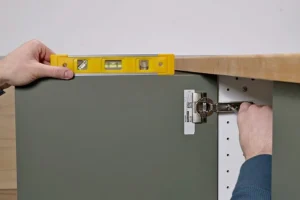
3. Draw a Level Reference Line
Even if the floor isn’t perfectly level, your cabinets should be.
One of the most important cabinet leveling techniques is creating a straight horizontal guide line across the wall before installation begins.
This reference line keeps all cabinets aligned evenly from one side of the kitchen to the other.
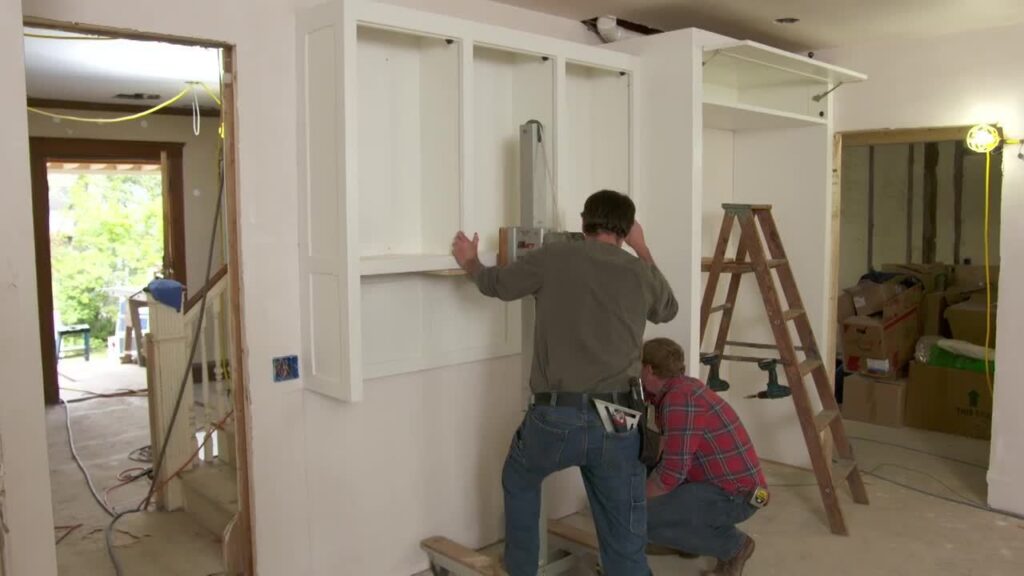
4. Install a Temporary Support Rail
Professional installers often attach a temporary wooden ledger board beneath the cabinet line.
This simple support:
- Holds cabinet weight during installation
- Reduces lifting strain
- Keeps alignment consistent
- Makes it easier to secure screws accurately
This small step can dramatically simplify how to hang wall cabinets safely.
5. Secure Cabinets One at a Time
Start with corner cabinets whenever possible.
After mounting the first cabinet:
- Check level alignment
- Clamp adjacent cabinets together
- Secure cabinets to studs
- Tighten screws gradually
Rushing this process is one of the biggest mistakes people make when installing kitchen cabinets correctly.
A Simple Framework for Accurate Cabinet Installation
A helpful way to approach cabinet installation is the “Measure–Mark–Mount” framework.
| Practice | When it Helps | Simple Cue | Mistake |
| Measure carefully | Before drilling | Double-check every dimension | Relying on visual estimates |
| Mark stud locations | Before lifting cabinets | Use painter’s tape guides | Missing secure anchor points |
| Mount slowly and level | During installation | Check alignment frequently | Tightening screws too quickly |
This framework keeps the process manageable and reduces avoidable problems.
Common Mistakes Homeowners Make
Even experienced DIYers sometimes struggle with kitchen wall cabinet installation because small errors quickly compound.
Ignoring Uneven Walls
Walls may bow or shift slightly over time. If measurements are based on assumptions instead of actual wall conditions, cabinet gaps become noticeable.
Mounting Cabinets Too High
Following the standard wall cabinet height matters for comfort and accessibility. Cabinets mounted too high can make daily use frustrating.
Using the Wrong Hardware
The tools needed for cabinet installation include heavy-duty screws specifically designed for cabinet mounting. Generic screws may loosen over time.
Skipping the Level Check
Cabinets that appear “close enough” often become visually distracting once backsplashes, countertops, and lighting are added.
Tools That Make Installation Easier
Professional-looking results often come down to preparation. Having the right tools needed for cabinet installation can improve accuracy dramatically.
Essential tools include:
- Tape measure
- Stud finder
- Laser level
- Power drill
- Cabinet clamps
- Screwdriver set
- Shims
- Pencil and chalk line
According to the National Association of Home Builders, kitchen remodels remain one of the most requested home improvement projects in the United States due to their strong impact on functionality and resale appeal.
Real-World Example: When Precision Saved a Remodel
A homeowner renovating a compact kitchen initially planned a full DIY wall cabinet installation. After measuring the space, they realized one wall leaned slightly inward near the ceiling.
If cabinets had been mounted without adjustment, the doors would not have aligned properly. Instead, small shims were added during installation to compensate for the uneven surface.
The final result looked seamless because the issue was caught early.
This is why experienced installers spend so much time measuring before they ever install wall cabinets.
When Professional Help Makes Sense
DIY projects can be rewarding, but some situations benefit from experienced craftsmanship.
Professional installers can help when:
- Walls are uneven or damaged
- Custom layouts require precise fitting
- Heavy cabinetry needs reinforced support
- Time efficiency matters
- Appliance integration becomes complex
Homeowners exploring Custom Cabinetry Services in Detroit, MI often choose professionals for this reason. Custom cabinets require tighter tolerances and more precise alignment than prefabricated units.
At Top Fabricators In the D, installation planning typically focuses on both visual symmetry and long-term durability rather than simply attaching cabinets quickly.
Misconceptions About Wall Cabinet Installation
“If It Looks Straight, It Is Straight”
Visual alignment can be misleading. Even slight unevenness becomes obvious after backsplash tile or under-cabinet lighting is installed.
“All Kitchens Follow the Same Measurements”
Every kitchen is different. Ceiling height, appliance size, and homeowner preferences all affect spacing decisions.
“DIY Means Cheaper”
Incorrect measurements often lead to wasted materials, damaged cabinets, and costly reinstallation work.
Sometimes investing in professional planning saves more money overall.
Conclusion
Learning how to measure and install wall cabinets accurately is about more than construction. It’s about creating a kitchen that feels balanced, functional, and built to last.
From careful measurements and stud placement to leveling and mounting, every step contributes to the final result. Whether you’re planning a small update or working with Custom Cabinetry Services in Detroit, MI, precision matters more than speed.
The most successful cabinet installations are rarely rushed. They’re planned thoughtfully, measured carefully, and installed with patience.
For homeowners seeking dependable craftsmanship and attention to detail, Top Fabricators In the D understands how small installation details shape the overall feel of a kitchen.
Summary
Accurate cabinet installation begins with careful planning and precise measurements. Proper wall stud placement for cabinets, leveling techniques, and spacing all contribute to a professional looking kitchen. Whether handling a DIY wall cabinet installation or hiring experts, attention to detail prevents costly mistakes and improves long term durability. A well installed cabinet system doesn’t just look better, it functions better every single day.
FAQs
What is the standard wall cabinet height in most kitchens?
Most wall cabinets are installed about 18 inches above the countertop, though custom layouts may vary depending on ceiling height and design preferences.
What are the most important tools needed for cabinet installation?
A tape measure, stud finder, level, drill, clamps, and shims are among the most important tools for accurate cabinet installation.
How do you install wall cabinets evenly?
Using cabinet leveling techniques like laser levels, guide lines, and temporary support rails helps keep cabinets aligned and evenly mounted.
Why should homeowners consider Custom Cabinetry Services in Detroit, MI?
Custom cabinetry services provide tailored designs, precise measurements, and professional installation that improve both functionality and appearance.
What makes Top Fabricators In the D different for cabinet installation?
Top Fabricators In the D focuses on careful measurements, craftsmanship, and durable installation methods that help kitchens look polished and perform reliably over time.